Solo play vs. shared play: building reciprocity step by gentle step
Demanding toy sharing before parallel play is established triggers tears; learn how genuine cooperation unfolds through neurodevelopmental stages.
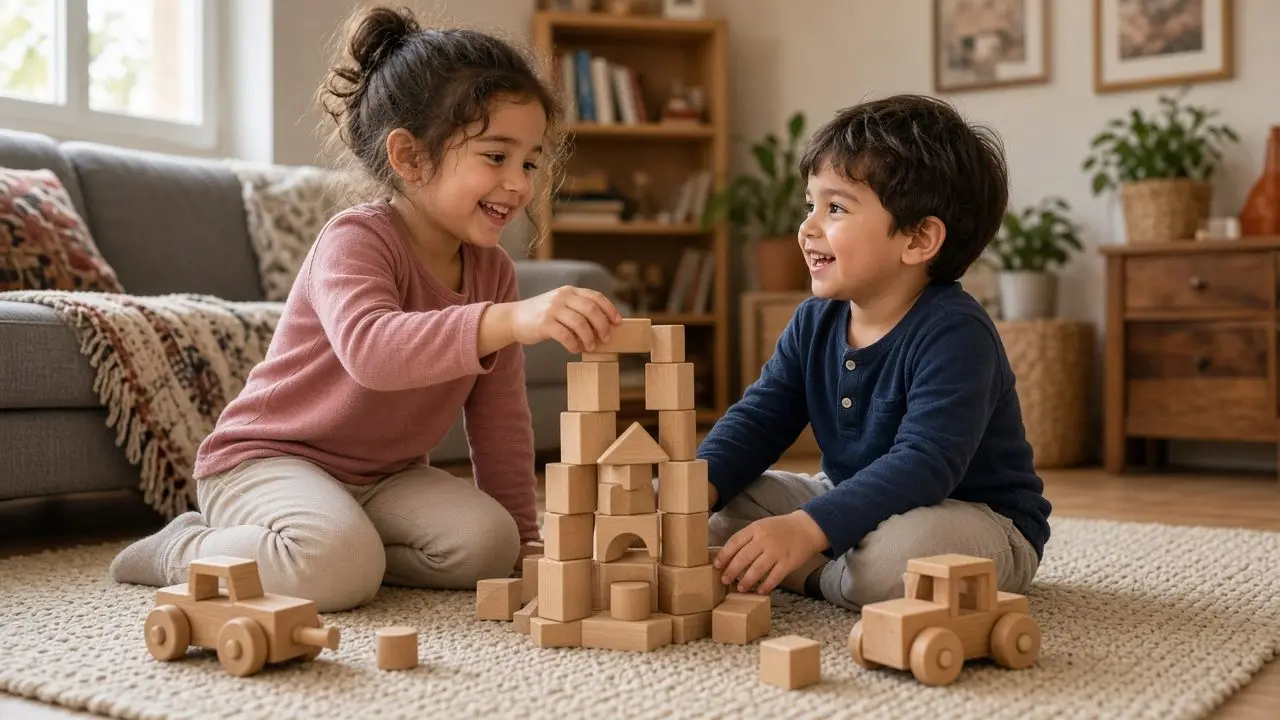
Cousins arrive to visit or neighborhood children meet at the playground. Enthusiastic adults immediately prompt: «share your truck!», «go build together!». Yet your child grips the toy tightly, moves to a corner to align toy cars, or becomes distressed if someone touches their items. Anxious thoughts arise: are they withdrawing or struggling with empathy? Demanding cooperative play from a child currently consolidating solitary or parallel play is like asking someone to read before learning letter sounds.
The neurodevelopmental perspective
Childhood play develops along predictable neurological stages: solitary play, spectator play, parallel play (playing alongside without direct interaction), associative play, and finally cooperative play with shared goals. For autistic children (ASD) or individuals developing socioaffective milestones, lining up cars or repeating themes provides a predictable, regulating anchor. Social reciprocity demands advanced theory of mind, cognitive flexibility, and the emotional regulation to surrender an item without perceiving loss. Forcing surrender before this readiness induces withdrawal.
Practical steps to try at home today
Cultivating true connection begins by honoring personal space and scaffolding reciprocity gently:
- Practice parallel and mirrored play: Sit alongside on the floor with matching materials (each holding their own blocks or figures). Mirror what they do without directing the scene or encroaching; this shared synchrony establishes social safety.
- Introduce instant-exchange turns: Play rolling a soft ball down a ramp or tapping a button with simple cues: «my turn, your turn». The wait should last only one or two seconds so anticipation remains joyful and calm.
- Bring duplicate toys to social settings: During playdates or park visits, keep similar items handy to offer companions, preventing your child from feeling compelled to surrender their comfort object while adapting to company.
The next step: meet your child at their developmental stage with TAEO | EdTech
Play is the primary workshop of the developing mind; it anchors the Socioemotional and Play domain within our pedagogical system. Knowing your child’s current play level enables connection without unnecessary tension.
At the TAEO Psychoeducational Organization, sixteen years of multidisciplinary expertise guide our digital platform, TAEO | EdTech. Through the Skills and Competencies Profile, you map out social milestones and receive tailored playful prompts to nurture shared joy at home.
Ahead of our official launch in December 2026, request priority access for a free trial of TAEO | EdTech in the form below. Discover how playful reciprocity blooms when grounded in genuine developmental readiness.