Tear-free toilet learning: what neurodevelopment reveals about sphincter readiness
Toilet learning is not an aggressive training regimen of charts and treats; it is a profound process of interoceptive maturation and bodily autonomy.
Family pressure or impending school deadlines often spark a rush toward independent bathroom use. Sticker charts are hung, seat adapters purchased, and hourly schedules enforced. Yet when your child is guided to the toilet, their body locks, tears flow, or repeated accidents happen the moment clothes are replaced. Caregivers frequently interpret these hurdles as obstinance or laziness. In reality, few everyday milestones are subjected to so much cultural pressure that dismisses the biological timetable of the nervous system.
The neurodevelopmental perspective
Toileting is not a behavioral trick conditioned through candy or praise: it represents the integration of interoceptive and neuromotor signals. To release voluntarily on a toilet, a child’s brain must first perceive internal visceral cues from the bladder and bowel (registering stretch before release occurs). Next, it must inhibit reflexes while navigating to the bathroom, and finally relax the pelvic floor while maintaining trunk stability. For autistic children (ASD) or those with sensory processing variations, visceral sensations can be muted, or the sound of rushing water and height of the seat induce genuine terror.
Practical steps to try at home today
Supporting this developmental transition without battles requires adjusting the environment and trusting organic timing:
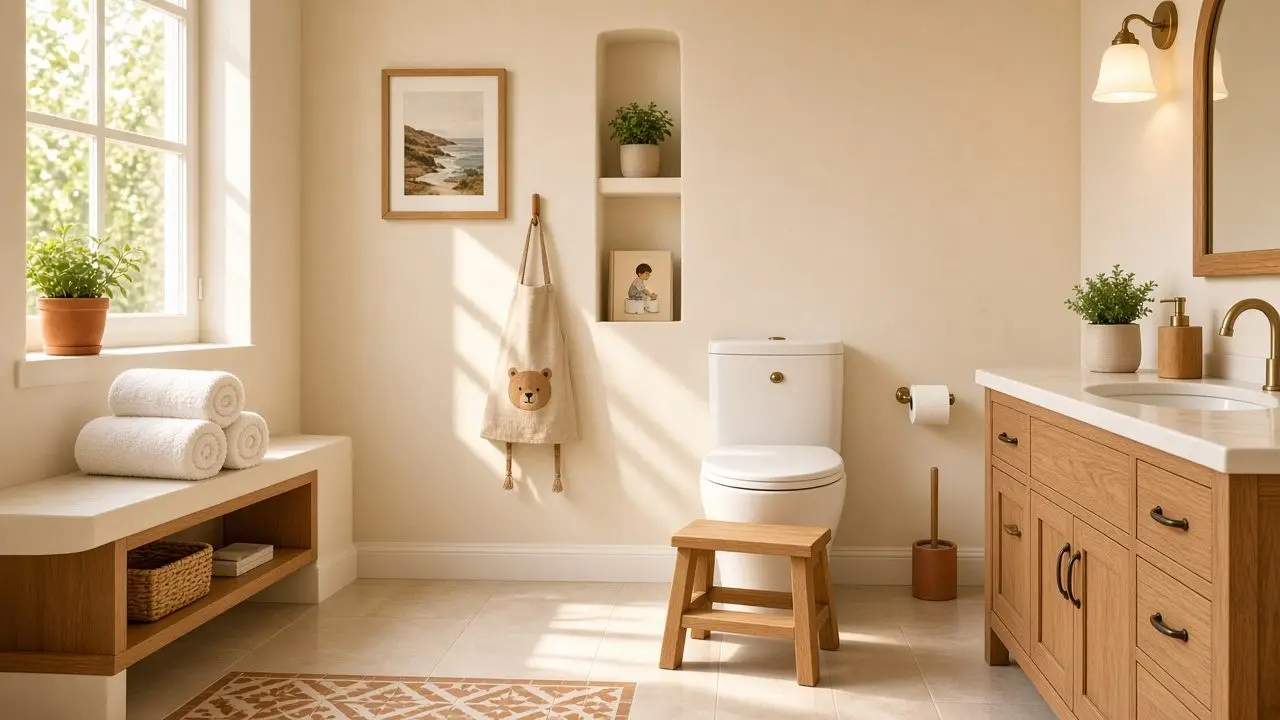
- Provide stable foot support at all times: Never allow legs to dangle unsupported. Place a solid stool so feet rest flat; ninety-degree hip flexion relaxes pelvic muscles and provides the somatic security required to let go without fear.
- Put internal body sensations into words or signs during daily routines: Build interoceptive literacy by sharing your own cues («my tummy feels full, I am walking to the restroom») and gently inquiring after meals whether their stomach feels full or light, without forcing a seat.
- Decouple toileting from rewards and punishments: Avoid sticker systems that create performance anxiety. Acknowledge teamwork and normalize misses with tranquil patience («our bodies are learning the signals; we will wipe up together without worry»).
The next step: meet your child at their developmental stage with TAEO | EdTech
Bathroom autonomy is a milestone rooted in Autonomy and Independence, one of the eight foundational neurodevelopmental areas assessed across our platform. Forcing an unready body delays progress; scaffolding biological readiness brings lasting ease to family life.
At the TAEO Psychoeducational Organization, sixteen years of multidisciplinary psychoeducational guidance inspire TAEO | EdTech. Through the Skills and Competencies Profile, you discover your child’s current readiness phase, receiving compassionate guidance and simple home activities tailored to their actual development.
For our official launch in December 2026, reserve early access to a free trial of TAEO | EdTech by entering your email in the form below. Guide your child’s independence with confidence and neuroaffirming warmth.